
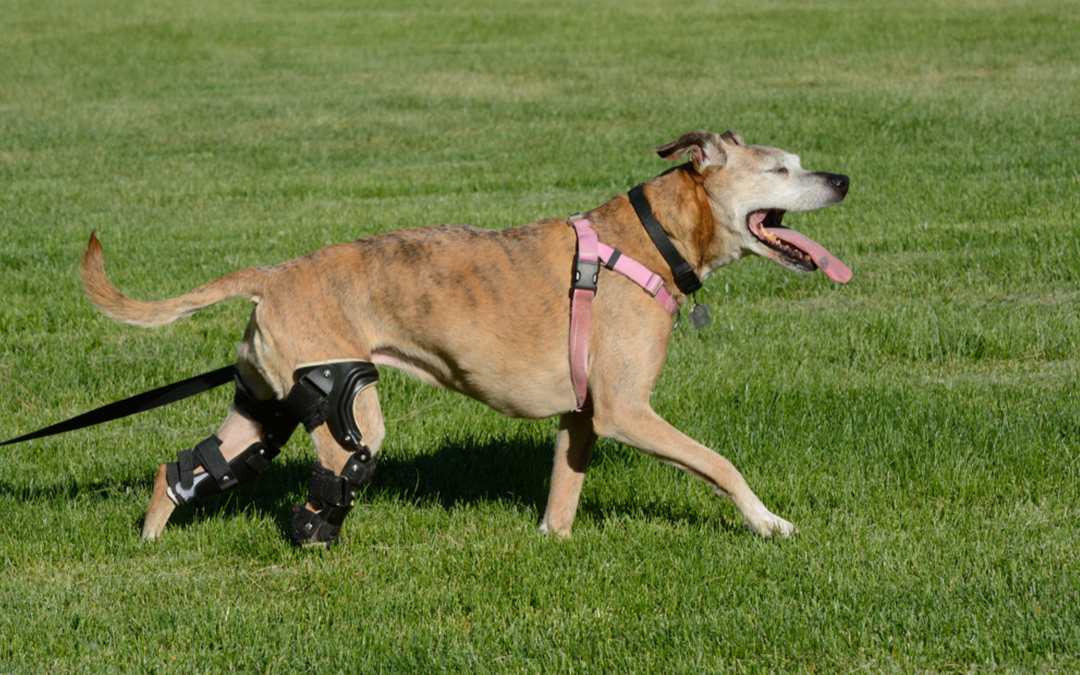
When dogs experience orthopedic injuries, joint instability, neurological conditions, or post-surgical recovery challenges, many pet owners are looking for ways to help improve comfort, mobility, and long-term function.
Dog bracing and rehabilitation are two tools that are often most effective when used together.
While some owners think of bracing as a stand-alone solution, braces are often most successful when combined with a structured rehabilitation plan designed to support strength, stability, movement, and healing.
What Is Orthopedic Bracing for Dogs?
Orthopedic braces are supportive devices designed to help stabilize specific joints or limbs.
Braces may be used for:
- Cruciate ligament (ACL/CCL) injuries
- Carpal or tarsal instability
- Arthritis support
- Neurological weakness
- Tendon or ligament injuries
- Post-surgical support
- Mobility assistance in senior dogs
Depending on the condition, bracing may help reduce strain on injured tissues while improving comfort and function during movement.
What Rehabilitation Adds to the Recovery Process
While braces provide support, rehabilitation focuses on improving how the body functions overall, building the body up.
Canine rehabilitation therapy may include:
- Therapeutic exercises
- Balance and coordination work
- Strengthening exercises
- Laser therapy
- Underwater treadmill therapy
- Manual therapy and stretching
- Pain management techniques
The goal is not only to help dogs feel better, but also to improve:
- Muscle strength
- Joint stability
- Mobility
- Weight-bearing ability
- Confidence during movement
Why Bracing Alone Is Not Always Enough
A brace can provide important external support, but it cannot fully rebuild muscle strength, coordination, or movement patterns on its own.
Without rehabilitation, dogs may continue to:
- Compensate incorrectly
- Lose muscle mass
- Develop stiffness
- Shift weight unevenly
- Experience ongoing weakness
This is especially important because many orthopedic conditions affect more than just one joint. When dogs alter the way they move, it can place additional stress on other areas of the body over time.
How Bracing and Rehab Work Together
When combined appropriately, bracing and rehabilitation can complement one another extremely well.
Bracing Helps Provide Stability
A brace may help:
- Reduce excessive joint movement
- Improve confidence while walking
- Support healing tissues
- Improve comfort during activity
This support can make it easier for dogs to safely participate in rehabilitation exercises.
Rehabilitation Helps Build Strength and Function
At the same time, rehabilitation helps address the underlying physical challenges contributing to mobility issues.
Therapy focuses on:
- Improving muscle support around the joint
- Restoring balance and coordination
- Encouraging proper movement patterns
- Preventing further weakness or compensation
Together, these approaches may help improve both short-term comfort and long-term outcomes.
Conditions That May Benefit from Combined Therapy
Bracing and rehabilitation are commonly used together for dogs with:
- Partial CCL tears
- Non-surgical cruciate injury management
- Arthritis and chronic joint instability
- Neurological weakness
- Post-operative recovery
- Senior mobility issues
Each dog’s treatment plan depends on:
- The specific diagnosis
- Severity of the condition
- Age and activity level
- Overall health and goals
Setting Realistic Expectations
While bracing and rehabilitation can provide significant benefits, it is important to understand that outcomes vary depending on the condition.
In some cases, the goal may be:
- Improved comfort
- Better mobility
- Slower progression of joint disease
- Increased stability
- Better quality of life
Not every dog will return to high-impact activity, but many can experience meaningful improvements in daily function and comfort.
Early Intervention Often Leads to Better Outcomes
One of the biggest advantages of rehabilitation is addressing mobility problems before severe compensation patterns develop.
Dogs are very good at adapting to discomfort, which means subtle weakness or instability may go unnoticed until problems become more advanced.
Early evaluation can help:
- Identify movement issues sooner
- Improve recovery potential
- Reduce additional strain on other joints
- Support long-term mobility
A Team Approach to Mobility Care
Successful orthopedic recovery often involves multiple tools working together.
Dog bracing, rehabilitation therapy, pain management, exercise modification, and weight management can all play important roles in helping dogs stay active and comfortable.
The best treatment plans are individualized to each dog’s specific condition and lifestyle.
At Animal Rehabilitation Center of Michigan, we work closely with pet owners and referring veterinarians to develop personalized rehabilitation plans for dogs recovering from orthopedic injuries, surgery, neurological conditions, and mobility challenges. Combining bracing and rehabilitation can often help dogs move more comfortably and confidently while supporting long-term mobility goals.