When a dog has arthritis, a ligament injury, hip dysplasia, or is recovering from orthopedic surgery, movement can become difficult. They may limp, struggle to rise, avoid stairs, tire quickly, or stop enjoying activities they once loved.
The challenge is that dogs with orthopedic conditions often need exercise to rebuild strength and mobility, but too much impact can increase pain or slow recovery. That is how hydrotherapy helps dogs and where hydrotherapy can make a meaningful difference.
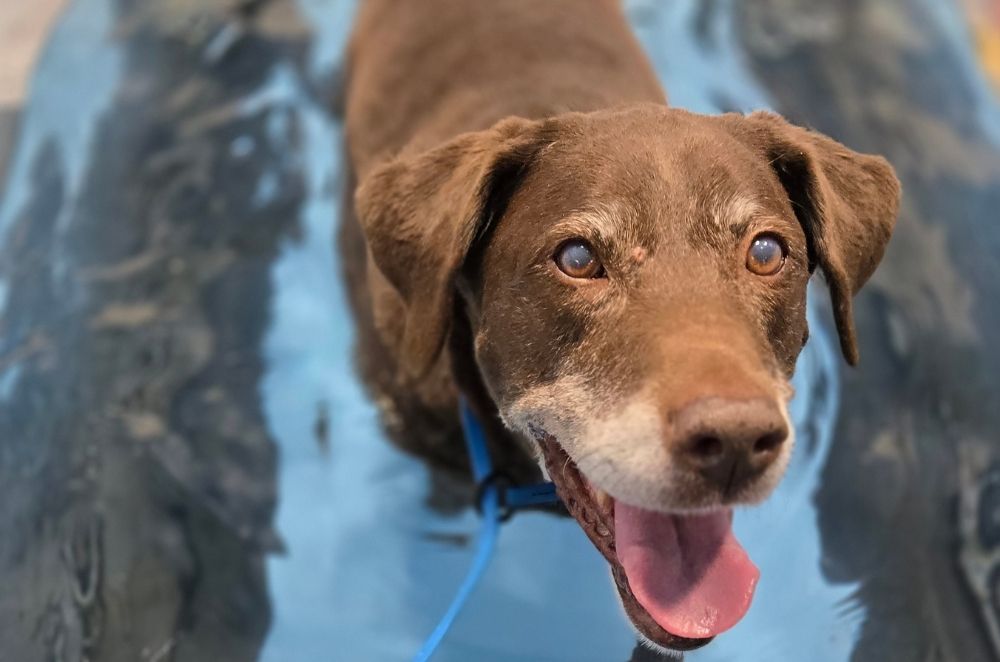
Hydrotherapy allows dogs to move in a supportive, low-impact environment. At the Animal Rehabilitation Center of Michigan, hydrotherapy is performed using an underwater treadmill, which helps dogs exercise safely while reducing stress on painful joints and healing tissues.
What Is Canine Hydrotherapy?
Canine hydrotherapy uses the physical properties of water to support movement, strength, comfort, and conditioning. In an underwater treadmill, a dog walks on a treadmill while warm water surrounds part of its body.
The water provides buoyancy, which helps support the dog’s weight. This reduces the load placed on joints, bones, muscles, and healing tissues. At the same time, water provides gentle resistance, which helps the dog build strength as they move.
For many dogs with orthopedic conditions, this combination of support and resistance makes hydrotherapy a valuable part of rehabilitation.
Why Water Helps Dogs Move More Comfortably
Water offers several benefits during rehabilitation:
Buoyancy reduces weight bearing.
When a dog is partially supported by water, they do not have to carry their full body weight during movement. This can make walking more comfortable for dogs with sore joints, arthritis, weakness, or post-surgical restrictions.
Resistance helps build strength.
Moving through water requires controlled effort. This helps strengthen muscles without the same level of impact as walking or running on land.
Warm water supports comfort and flexibility.
Warm water can help relax muscles, reduce stiffness, and ease movement for dogs with joint or soft-tissue discomfort.
Hydrostatic pressure may support circulation.
The pressure of water around the body can help reduce swelling and improve circulation during movement.
Controlled movement supports better gait patterns.
Because the treadmill speed and water level can be adjusted, the rehabilitation team can help encourage safe, purposeful movement based on the dog’s needs.
Orthopedic Conditions That May Benefit From Canine Hydrotherapy
Canine hydrotherapy may be recommended for many orthopedic and mobility-related conditions, including:
- Arthritis
- Hip dysplasia
- Elbow dysplasia
- Cranial cruciate ligament injuries
- Post-surgical recovery
- Fracture recovery
- Soft tissue injuries
- Muscle weakness
- Joint stiffness
- Reduced range of motion
- Sports injuries
- Weight-related joint stress
- Age-related mobility decline
Every dog is different. A rehabilitation plan should be tailored to the dog’s diagnosis, comfort level, surgical history, strength, fitness, and mobility goals.
Canine Hydrotherapy for Arthritis and Joint Pain
Dogs with arthritis often need regular movement to maintain muscle tone and joint flexibility. However, land-based exercise can sometimes be uncomfortable, especially during flare-ups or after periods of rest.
Hydrotherapy allows arthritic dogs to move with less impact. The buoyancy of water helps reduce stress on painful joints, while the treadmill encourages controlled walking. This can help improve strength, flexibility, endurance, and confidence.
For senior dogs, hydrotherapy may also support quality of life by helping them stay active in a safer, more comfortable way.
Canine Hydrotherapy After Orthopedic Surgery
After orthopedic surgery, dogs need a careful balance of rest, healing, and gradual return to movement. Too much activity too soon can be harmful, but too little movement can contribute to weakness, stiffness, and slower recovery.
Underwater treadmill therapy may be used as part of a post-surgical rehabilitation plan when appropriate. It can help dogs:
- Rebuild muscle
- Improve range of motion
- Practice controlled weight bearing
- Reduce stiffness
- Improve limb use
- Support a more normal walking pattern
- Build endurance gradually
The timing and intensity of hydrotherapy depend on the type of surgery, the surgeon’s recommendations, and the dog’s individual recovery.
Canine Hydrotherapy for CCL Injuries
Cranial cruciate ligament injuries are common orthopedic problems in dogs. Whether a dog has surgery or is managed conservatively, rehabilitation can play an important role in recovery.
Hydrotherapy may help dogs with CCL injuries by encouraging controlled rear-limb use while reducing joint stress. The underwater treadmill can help strengthen the muscles around the knee, including the quadriceps and hamstrings, which are important for stability and function.
Because CCL injuries can vary in severity, hydrotherapy should be part of a customized rehabilitation plan.
Canine Hydrotherapy for Hip Dysplasia
Dogs with hip dysplasia often benefit from strengthening the muscles that support the hips and core. Stronger muscles can help improve stability and comfort, even though rehabilitation cannot change the structure of the hip joint itself.
The underwater treadmill can be especially helpful because it encourages dogs to extend and use their rear limbs while the water reduces stress on painful joints. Over time, this can help improve strength, endurance, and mobility.
Underwater Treadmill vs. Swimming
Many pet owners ask whether swimming provides the same benefits as underwater treadmill therapy. Both can be useful, but they are not the same.
When dogs swim, they often use their front legs heavily while their back legs may bend more than they extend. Swimming can be a good workout, but it does not always encourage the same controlled walking motion needed to rebuild specific orthopedic strength.
With an underwater treadmill, the rehabilitation team can control the water level, treadmill speed, session length, and movement pattern. This allows for more targeted therapy, especially when the goal is to improve rear-limb strength, joint range of motion, gait, and limb awareness.
What If My Dog Does Not Like Water?
Many dogs who do not love swimming can still do well with underwater treadmill therapy. In an underwater treadmill, the dog walks into the empty chamber. The water gradually fills from the bottom, and the dog’s feet stay on the treadmill surface.
This is very different from being placed into a pool. The rehabilitation team can use patience, positive reinforcement, and gentle handling to help the dog acclimate.
The goal is to make the experience as calm, safe, and productive as possible.
Why Supervision Matters
Hydrotherapy should be guided by trained rehabilitation professionals. Dogs with orthopedic conditions need more than “exercise in water.” They need the right water level, speed, duration, frequency, and progression.
Too much activity, poor form, or the wrong exercise plan can worsen pain or delay healing. A supervised program helps ensure that hydrotherapy supports the dog’s recovery instead of overloading the body.
A rehabilitation practitioner can also monitor:
- Comfort level
- Fatigue
- Gait quality
- Limb use
- Pain signals
- Strength changes
- Range of motion
- Progress over time
This allows the plan to be adjusted as the dog improves.
Hydrotherapy as Part of a Complete Rehab Plan
Hydrotherapy is often most effective when combined with other rehabilitation therapies. Depending on the dog’s condition, a complete plan may also include:
- Therapeutic exercises
- Laser therapy
- Piezo shockwave therapy
- Manual therapy
- Massage
- Heat or cold therapy
- Weight management
- Home exercise plans
- Mobility aids or braces
- Environmental modifications
The best rehabilitation plan addresses the whole dog, not just one painful joint or injured limb.
Signs Your Dog May Benefit From Canine Hydrotherapy
Your dog may benefit from a rehabilitation evaluation if you notice:
- Limping
- Stiffness after rest
- Trouble rising
- Difficulty with stairs
- Reluctance to jump
- Loss of muscle
- Slower walks
- Decreased endurance
- Bunny-hopping gait
- Pain after activity
- Recovery from orthopedic surgery
- Reduced use of one limb
- Arthritis or joint disease
- Weight-related mobility challenges
Early intervention can help many dogs move more comfortably and maintain better function over time.
Helping Dogs Move With Less Pain
Orthopedic conditions can affect a dog’s comfort, confidence, and quality of life. Hydrotherapy offers a gentle, effective way to help dogs move, strengthen, and recover with less impact on painful joints.
At the Animal Rehabilitation Center of Michigan, underwater treadmill therapy is customized to each dog’s needs. Whether your dog is recovering from surgery, managing arthritis, rebuilding after an injury, or struggling with mobility, our rehabilitation team can develop a plan to support strength, comfort, and long-term movement.
If your dog is slowing down, limping, or recovering from an orthopedic condition, contact the Animal Rehabilitation Center of Michigan to schedule a rehabilitation evaluation and learn whether hydrotherapy may be right for them.